


Industrial Ms Flanges
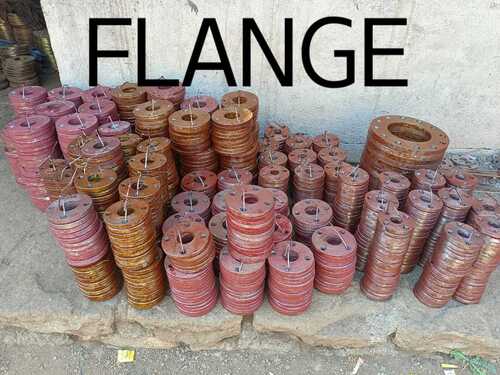
Product Details:
- Grade IS 2062, ASTM A105, or Equivalent
- Feature Corrosion Resistant, Durable, Leak Proof
- Application Pipelines, Petrochemical, Gas, Oil, Water Supply
- Purity High MS Content
- Product Type Industrial Flange
- Material Mild Steel (MS)
- Standard ANSI, DIN, JIS, BS, IS
30 INR/Piece
X
Industrial Ms Flanges Price And Quantity
- 500 , , Piece
- 30 INR/Piece
- Depends on size and type
- Wooden Box or Pallet
- Raised Face (RF), Flat Face (FF), Ring Type Joint (RTJ)
- Close Dimensional Tolerance
- Yes
- -29C to 425C
- Accurate Number & Diameter of Holes
- Machined Surface
- 160-210 HB
- Long service life
- Meets International Industrial Standards
Industrial Ms Flanges Product Specifications
- ANSI, DIN, JIS, BS, IS
- Black, Silver
- Forged or Cast
- Industrial Flange
- Pipelines, Petrochemical, Gas, Oil, Water Supply
- 150 to 2500 kpa
- High MS Content
- Round
- Corrosion Resistant, Durable, Leak Proof
- IS 2062, ASTM A105, or Equivalent
- Mild Steel (MS)
- Other
- 1/2 inch to 60 inch
- Depends on size and type
- Wooden Box or Pallet
- Raised Face (RF), Flat Face (FF), Ring Type Joint (RTJ)
- Close Dimensional Tolerance
- Yes
- -29C to 425C
- Accurate Number & Diameter of Holes
- Machined Surface
- 160-210 HB
- Long service life
- Meets International Industrial Standards
Industrial Ms Flanges Trade Information
- 800 , , Piece Per Day
- 10 Days
Product Description
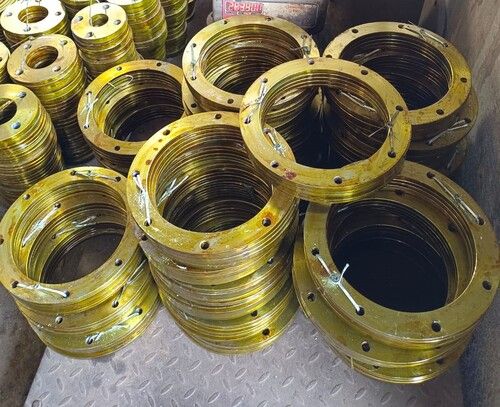
Right from our commencement, we are competent of manufacturing and supplying an excellent range of Industrial MS Flanges. Best known for their durability, excellent performance and reliability, these are widely appreciated in the market. Besides, these are used on equipment for the nozzles and in piping systems. The flanges are bolted together with a gasket in between to prevent leakage. The offered flanges are manufactured using finest grade steel procured from our trustworthy vendors. Prior to dispatch, these Industrial MS Flanges stringently checked on various parameters to make sure a defect free range is delivered.
Features:
- Excellent finish
- Rust resistant
- Robust construction
Versatile Application Across Industries
Our industrial MS flanges are widely utilized in pipelines, petrochemical plants, gas distribution, oil refineries, and water supply systems. These flanges are tailored to meet the specific demands of each sector by offering numerous face types, pressure classes from Class 150 to 2500, and a comprehensive size range. Their robust construction delivers long-term reliability, even in strenuous industrial environments.
High Standards and Quality Assurance
Compliance with global benchmarks such as ANSI, DIN, JIS, BS, and IS guarantees that each flange matches stringent international requirements. The flanges undergo meticulous processing, including forging or casting, accurate drilling for seamless assembly, and controlled hardness between 160210 HB. Their machined, corrosion-resistant surfaces ensure durable operation and minimal maintenance.
FAQs of Industrial Ms Flanges:
Q: How should I select the appropriate face type for my MS flanges?
A: Choosing the right face type depends on the required sealing performance and the application environment. Raised Face (RF) is best for most pressure environments, Flat Face (FF) suits low-pressure systems, while Ring Type Joint (RTJ) is ideal where superior sealing is necessary, such as high-pressure pipelines.Q: What international standards do your industrial MS flanges comply with?
A: Our MS flanges meet several international standards, including ANSI, DIN, JIS, BS, and IS, ensuring compatibility and safety in a variety of global applications.Q: When should these flanges be used in pipeline systems?
A: Industrial MS flanges are suitable for use during the installation of new pipelines or the maintenance of existing ones, particularly in oil, gas, petrochemical, and water systems requiring leak-proof, durable connections.Q: Where are these flanges commonly applied?
A: They are frequently employed in pipelines transporting oil, gas, chemicals, and water, as well as in infrastructure projects that require robust and corrosion-resistant joints.Q: What is the process for manufacturing MS flanges?
A: MS flanges are produced through forging or casting, followed by precision machining, drilling to specified tolerances, surface finishing (galvanized or painted), and thorough inspection to ensure close dimensional accuracy.Q: How should these flanges be packed and shipped?
A: To protect against damage and rust, each flange is packed in a sturdy wooden box or pallet, ensuring safe transit and delivery to customers worldwide.Q: What key benefits do industrial MS flanges provide?
A: These flanges offer excellent corrosion resistance, precise dimensional tolerance, flexible connection options (welded or bolted), and versatility in challenging temperature and pressure conditions, making them a durable, cost-effective solution for industrial pipelines.Tell us about your requirement

Price:
Quantity
Select Unit
- 50
- 100
- 200
- 250
- 500
- 1000+
Additional detail
Mobile number
Email

Other Products in 'MS Flange Manufacturer' category

Contact Us
POOJAN FLANGE PRODUCT
GST : 24ABWPC8433G1ZI
GST : 24ABWPC8433G1ZI

- Plot-9, Survey No. 111, B/H Hotel Madhuvan, Vartej Gidc, Bhavnagar - 364003, Gujarat, India
- Phone :07971190199
- Send Inquiry
-
 Send Inquiry
- Mr Vipul Patel (Proprietor)
- Mobile :07971190199
|

 |
POOJAN FLANGE PRODUCT
All Rights Reserved.(Terms of Use) Developed and Managed by Infocom Network Private Limited. |
